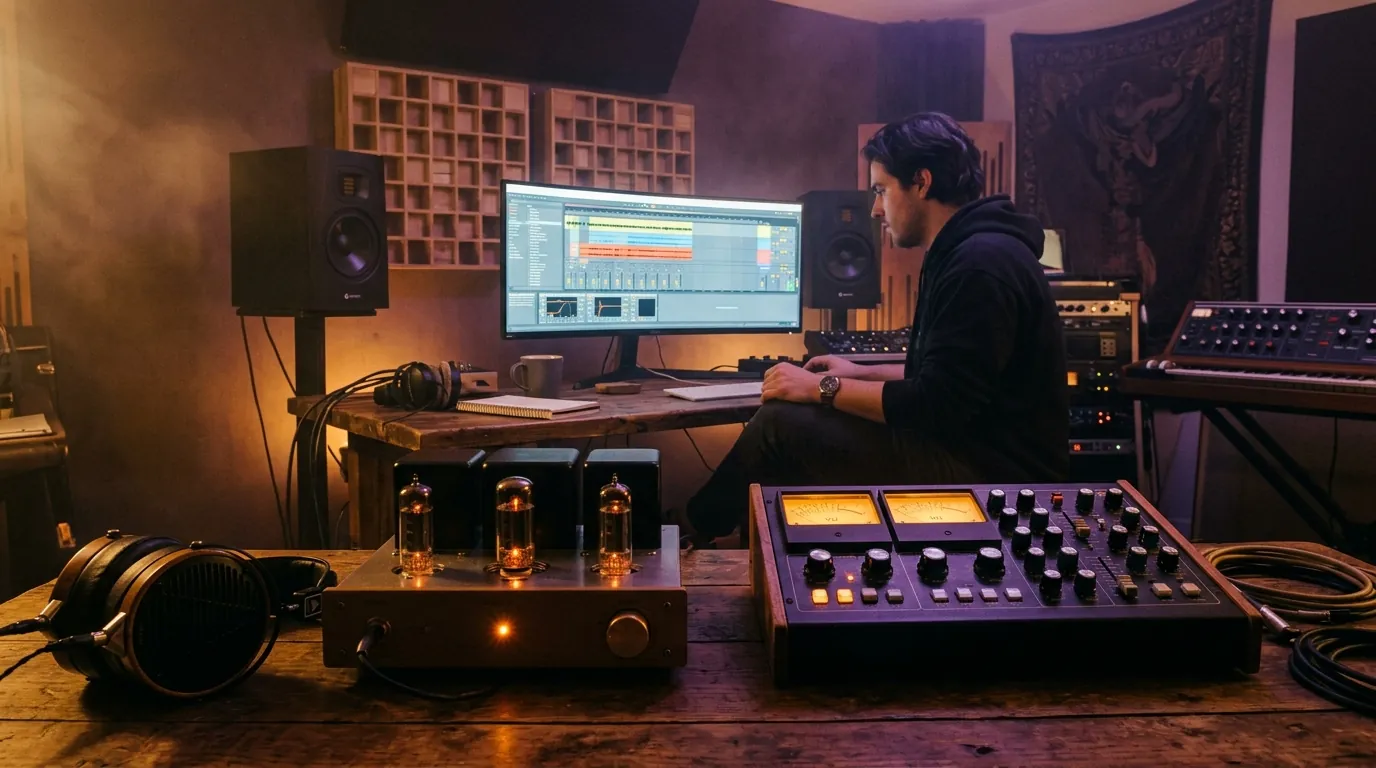
It's important to view these tools as assistive, not fully autonomous. They are excellent for getting a solid starting point, for "roughing out" a mix or master, or for learning. However, they lack the nuanced artistic judgment, the ear for subtle emotional impact, and the ability to troubleshoot complex creative problems that a human engineer possesses. For truly unique, groundbreaking, or highly artistic sonic results, human engineers still reign supreme. But for a solid, commercially competitive sound, AI is remarkably good.
Step 6 of 10 in this module#976 of 1,000
6. AI as a Creative Tool, Not a Replacement (Yet)
Part 10 • Impact of AI Mastering/Mixing (Assistive Tools)
See a way to improve this point?
Community Driven
Help us keep this 1,000-point curriculum sharp for all creators. Suggest a wording tweak, report a changed tool, or share your thoughts.
Loading user progress & flight station...
In this module: Impact of AI Mastering/Mixing (Assistive Tools)10 steps
- 1The Democratization of the "Pro Sound"
- 2iZotope's Neutron and Ozone: Your AI Co-Pilot
- 3How Assistive AI Works: Data-Driven Audio Analysis
- 4The Impact: Lowering the Technical Barrier to Release
- 5The Strategic Implication: Commoditizing Engineering Skills
- 6AI as a Creative Tool, Not a Replacement (Yet)
- 7Cost-Effectiveness: Replacing Expensive Services
- 8Strategic Use: A/B Testing and Reference Tracks
- 9Impact on Creative Workflow: Speed and Iteration
- 10Your Actionable AI Audio Strategy
Tip: press ← and → to move between steps.