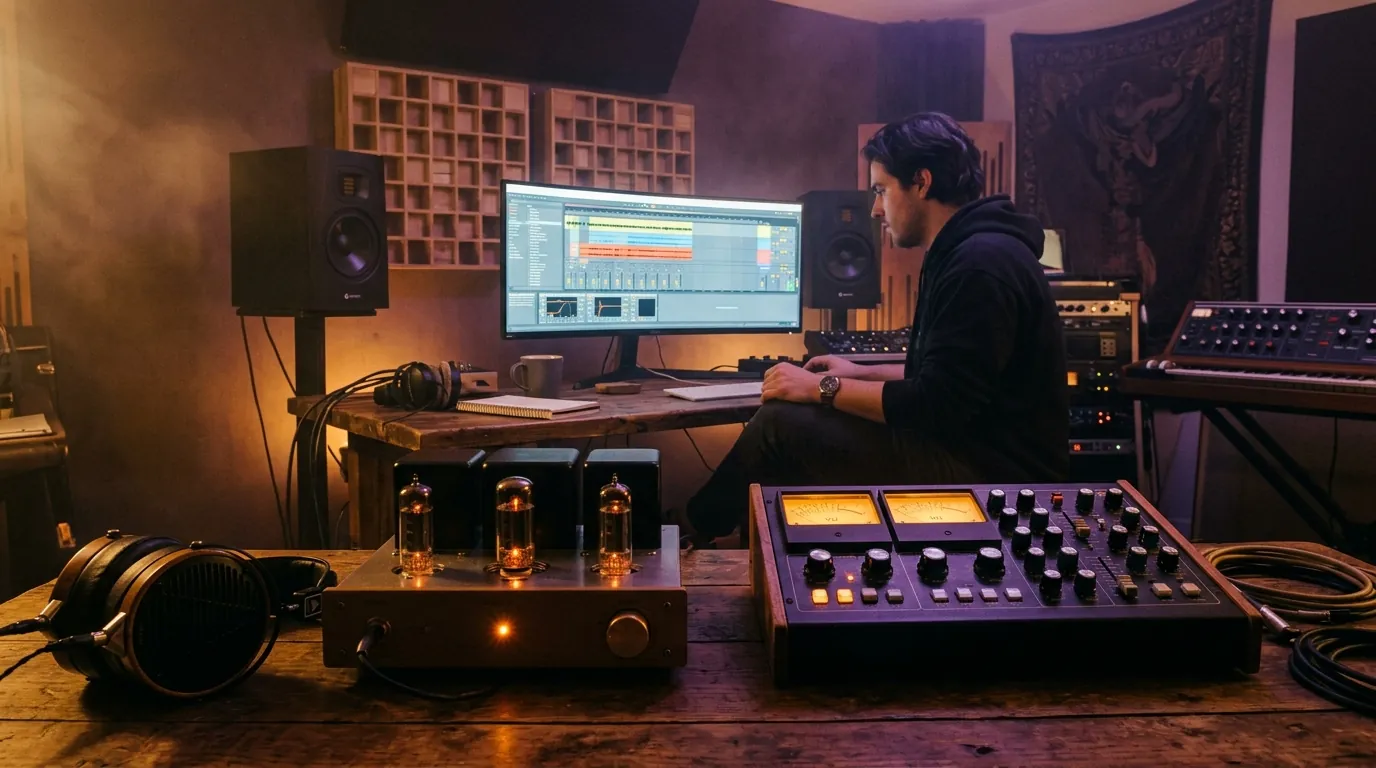
Generative AI for music refers to artificial intelligence systems that can create entirely new musical compositions, including melody, harmony, lyrics, and even vocals, from simple text prompts. Unlike AI assistive tools that aid human creation, generative AI creates de novo music. Tools like Suno and Udio are leading this frontier, allowing users to input a short text description (e.g., "upbeat indie folk song about friendship") and generate a complete, 2-3 minute song within seconds.
Step 1 of 10 in this module#981 of 1,000
1. Defining Generative AI for Music
Part 10 • Threat of Generative AI (The Low-End Monetization Threat)
See a way to improve this point?
Community Driven
Help us keep this 1,000-point curriculum sharp for all creators. Suggest a wording tweak, report a changed tool, or share your thoughts.
Loading user progress & flight station...
In this module: Threat of Generative AI (The Low-End Monetization Threat)10 steps
- 1Defining Generative AI for Music
- 2Suno/Udio: Complete Songs with Commercial Use Rights
- 3The "Low-End" Music Market: Sync and Library Music
- 4The Demonetization Effect: Why AI Wins on Price and Speed
- 5Strategic Implications for Independent Artists
- 6The "Human Touch" Advantage: Emotion and Storytelling
- 7Copyright and Attribution Challenges
- 8Strategic Adaptation: Collaboration with AI (Not Competition)
- 9The Importance of Fan Connection: The Un-Monetizable Asset
- 10Your Actionable Generative AI Response Strategy
Tip: press ← and → to move between steps.