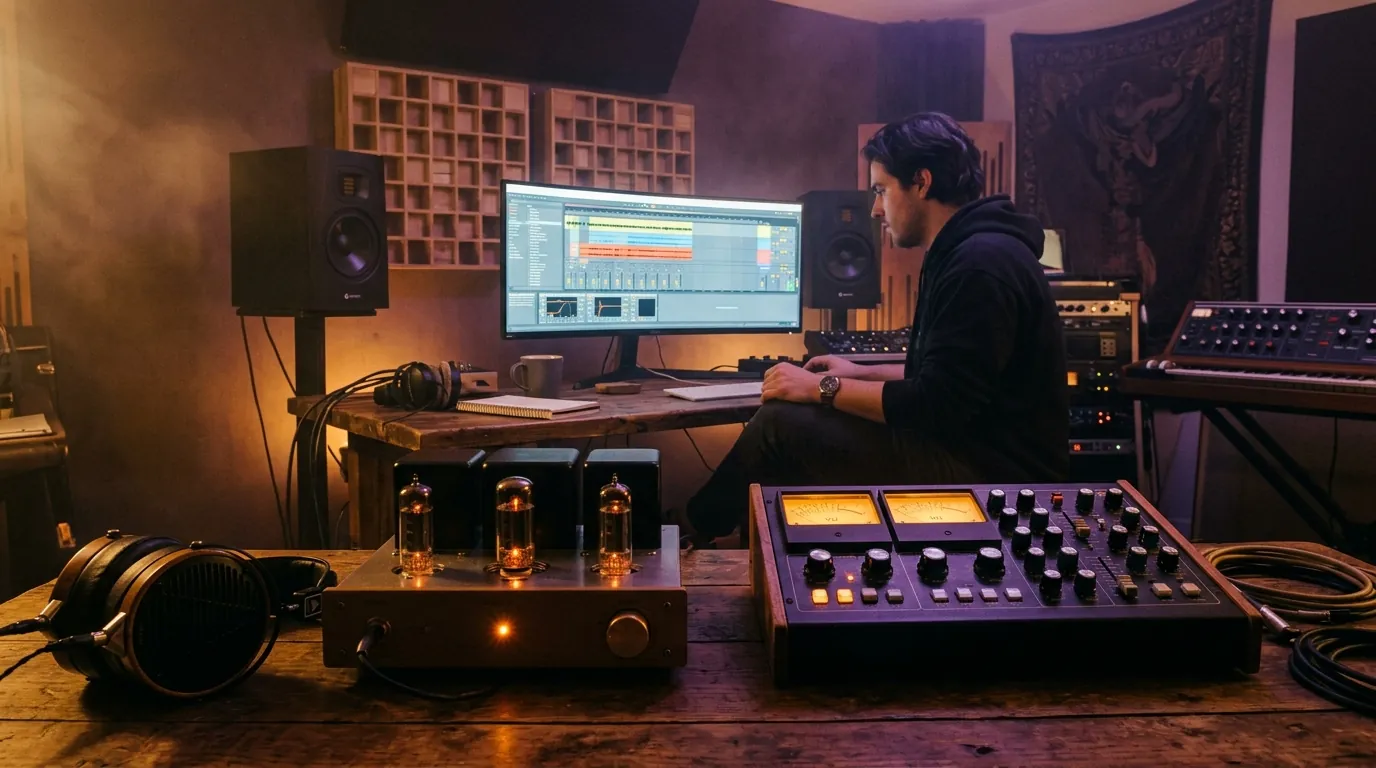
To increase your chances of sync placements, actively work to build a "sync-friendly" catalog:
<ul> <li><strong>Instrumental Versions:</strong> Always produce high-quality instrumental versions of your tracks. Supervisors often need these for background scoring.</li> <li><strong>Clean Versions:</strong> Have radio-edit versions without explicit lyrics.</li> <li><strong>Categorize Your Music:</strong> Clearly tag your music with mood, genre, and instrumentation.</li> <li><strong>High-Quality Production:</strong> Ensure your mixes and masters are professional and competitive.</li> </ul> This proactive approach makes your music more appealing to supervisors.Step 8 of 10 in this module#78 of 1,000
8. Building Your "Sync-Friendly" Catalog
Part 1 • Synchronization (Sync) Royalty Defined
See a way to improve this point?
Community Driven
Help us keep this 1,000-point curriculum sharp for all creators. Suggest a wording tweak, report a changed tool, or share your thoughts.
Loading user progress & flight station...
In this module: Synchronization (Sync) Royalty Defined10 steps
- 1Defining Synchronization: Music to Picture
- 2The Dual Nature of a Sync License: Composition and Master
- 3Why Sync is Different: Direct Negotiation and Upfront Fee
- 4Strategic Value: High-Value, Decoupled Revenue
- 5The Role of Music Supervisors and Sync Agencies
- 6What Music Supervisors Look For
- 7The Impact of a Sync Placement: Beyond the Money
- 8Building Your "Sync-Friendly" Catalog
- 9The "Metadata" of Sync: Searchability
- 10Your Actionable Sync Royalty Strategy
Tip: press ← and → to move between steps.