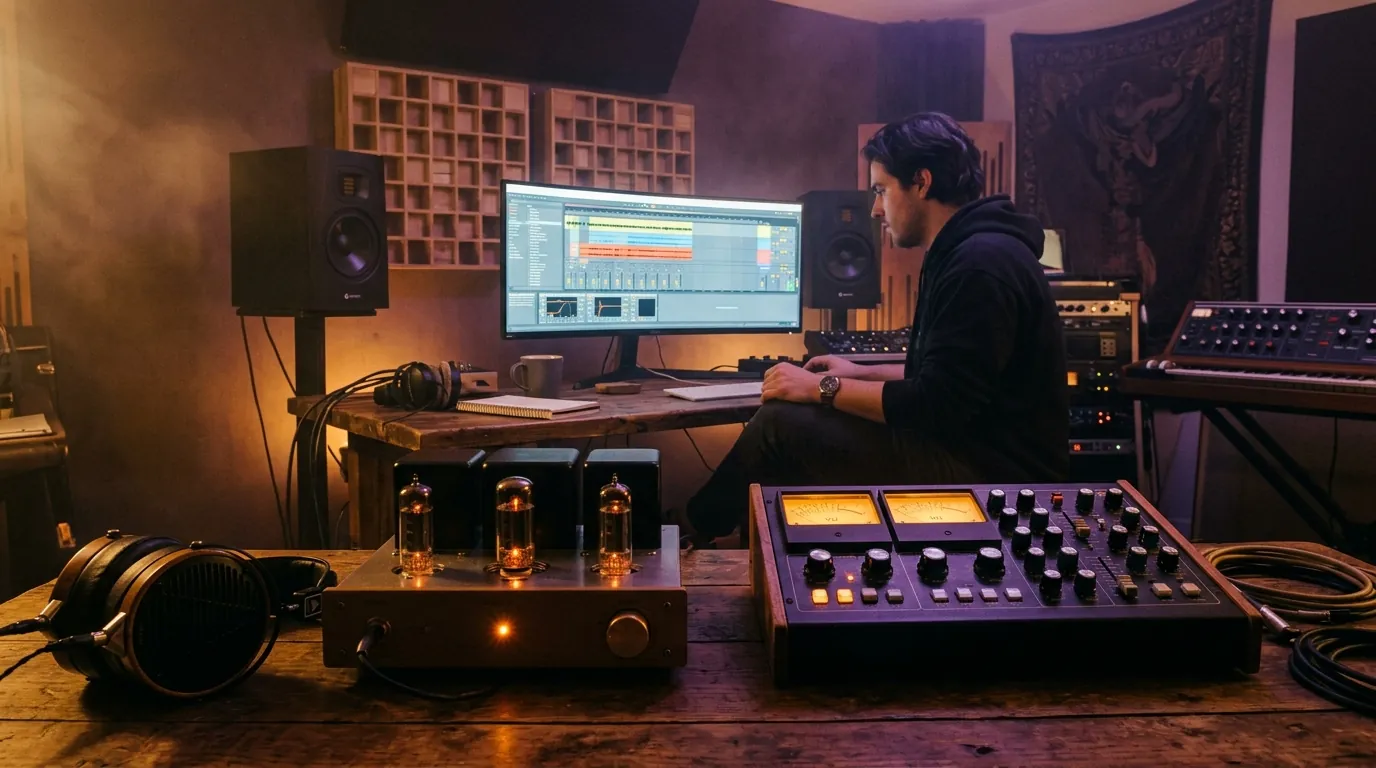
A Synchronization License (or "Sync License") grants permission to use a musical work (the composition) and often the corresponding sound recording (the master) in conjunction with visual media. This act of "synchronizing" music to picture—be it in a film, television show, commercial, video game, or online advertisement—is what generates a Sync Royalty. It's an agreement that covers the rights to integrate your music into a visual work, creating a new, combined piece of media.
Step 1 of 10 in this module#71 of 1,000
1. Defining Synchronization: Music to Picture
Part 1 • Synchronization (Sync) Royalty Defined
See a way to improve this point?
Community Driven
Help us keep this 1,000-point curriculum sharp for all creators. Suggest a wording tweak, report a changed tool, or share your thoughts.
Loading user progress & flight station...
In this module: Synchronization (Sync) Royalty Defined10 steps
- 1Defining Synchronization: Music to Picture
- 2The Dual Nature of a Sync License: Composition and Master
- 3Why Sync is Different: Direct Negotiation and Upfront Fee
- 4Strategic Value: High-Value, Decoupled Revenue
- 5The Role of Music Supervisors and Sync Agencies
- 6What Music Supervisors Look For
- 7The Impact of a Sync Placement: Beyond the Money
- 8Building Your "Sync-Friendly" Catalog
- 9The "Metadata" of Sync: Searchability
- 10Your Actionable Sync Royalty Strategy
Tip: press ← and → to move between steps.